
Smartphones · Samsung · 5G
Samsung Galaxy S26 Ultra Review: Privacy Display, 60W Charging and the 200MP Camera (2026)
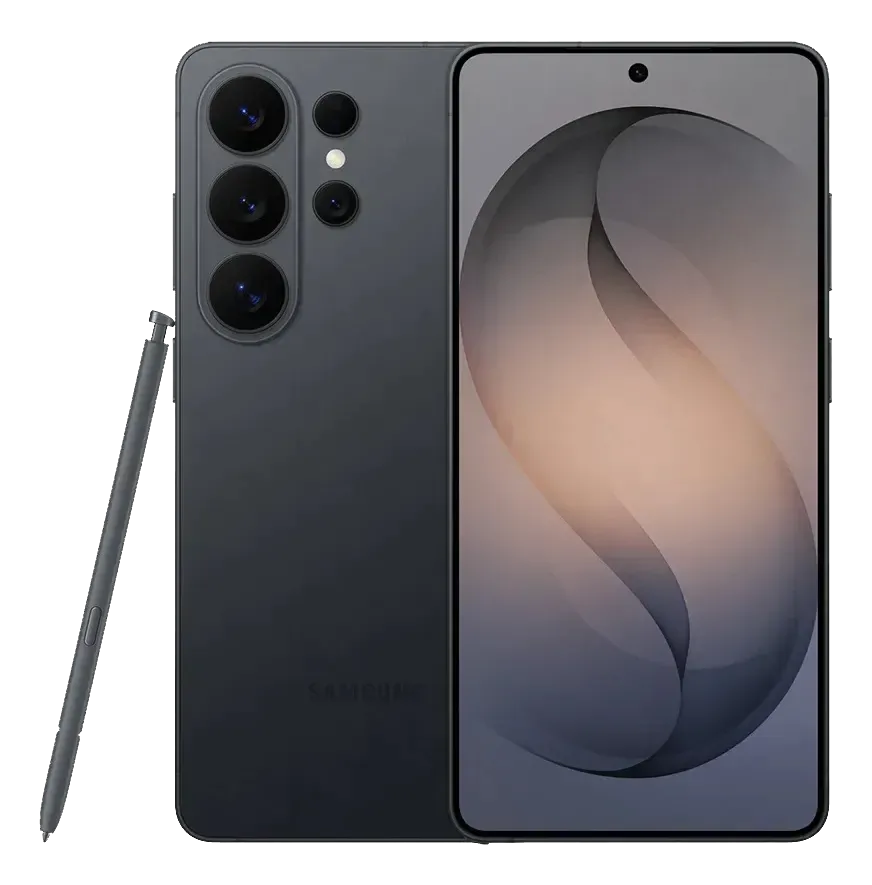
Every February Samsung refreshes the Galaxy S Ultra, and in 2026 the Galaxy S26 Ultra arrives with the changes buyers have been asking about for three years: a genuinely new display feature, charging that finally stops being an embarrassment, and a thinner, lighter body. This review compiles Samsung's official specifications, GSMArena's and PCMag's independent lab measurements, Tom's Guide and Trusted Reviews field testing, the Mercado Livre listing price and verified buyer opinions, so you can decide in minutes whether this is your next phone.
Samsung Galaxy S26 Ultra in 30 Seconds
- The feature no other phone has: the world's first built-in Privacy Display on mobile: narrow-angle pixels make the screen unreadable from the side, you can turn it on per app, on notifications or every time you type a PIN. It costs a little image quality while active, and that trade-off is honest.
- Charging finally fixed. Super Fast Charging 3.0 at 60W over standard USB-PD PPS: GSMArena measured 51% in 15 minutes, 84% in 30 minutes and a full charge in 43 minutes, holding 51–53W for a long stretch. Wireless jumped to 25W, though Samsung still skips the built-in Qi2 magnets.
- Same 5,000mAh battery, slightly better days. Samsung has not changed the capacity since the S20 Ultra, so expectations should be set: 16:23h active use in GSMArena's lab and up to 31 hours of video playback, better than the S25 Ultra but behind the iPhone 18 Pro Max and the big-battery Chinese rivals.
- 200MP camera with brighter lenses: the main sensor keeps its 200MP resolution but moves from f/1.7 to f/1.4 (Samsung claims 47% more light), the 50MP 5x telephoto goes to f/2.9 (37% brighter), and you keep a real 3x + 5x zoom pair, 8K video, the new APV codec and Horizon Lock. The weak link is the 10MP 3x tele with a smaller sensor.
- Performance and updates. Snapdragon 8 Elite Gen 5 for Galaxy, 12GB RAM (16GB on the 1TB model), AnTuTu around 3.89 million, plus seven years of OS updates that carry it to Android 23 and security patches into 2033.
- Lightest Ultra yet, with the S Pen, 214g and 7.9mm, down from 218g and 8.2mm, in Armor Aluminum with Gorilla Armor 2 and IP68, the built-in S Pen still in its silo, and 256GB from R$ 6.921,00 on Mercado Livre.
Specification Comparison
| Feature | Galaxy S26 Ultra | Galaxy S25 Ultra | iPhone 18 Pro Max |
|---|---|---|---|
| Display | 6.9" Dynamic AMOLED 2X, 1440x3120, 120Hz, 2600 nits peak, Privacy Display | 6.9" Dynamic AMOLED 2X, 1440x3120, 120Hz, 2600 nits peak | 6.9" Super Retina XDR, 120Hz, 3000 nits peak, Ceramic Shield 2 |
| Chipset | Snapdragon 8 Elite Gen 5 for Galaxy (3nm), 12GB / 16GB RAM | Snapdragon 8 Elite for Galaxy, 12GB RAM | Apple A20 Pro (2nm), 12GB RAM |
| Rear Camera | 200MP ƒ/1.4 + 50MP 5x ƒ/2.9 + 10MP 3x ƒ/2.4 + 50MP ultrawide ƒ/1.9 | 200MP ƒ/1.7 + 50MP 5x ƒ/3.4 + 10MP 3x + 50MP ultrawide | 48MP main with variable aperture ƒ/1.48–ƒ/4.0 + 48MP 4x tele + 48MP ultrawide |
| Front Camera | 12MP, ƒ/2.2, autofocus | 12MP, ƒ/2.2 | 18MP Center Stage, ƒ/1.9 |
| Battery / Charging | 5000mAh / 60W wired (51% in 15 min, full in 43 min), 25W wireless | 5000mAh / 45W wired, 15W wireless | 5391–5567mAh / 60W wired, 25W MagSafe |
| Lab Battery Score | 16:23h active use (GSMArena) · 15:05h video streaming (PCMag) | 15:15h active use (GSMArena) | 19:20h active use (GSMArena) |
| Build / Protection | Armor Aluminum + Gorilla Armor 2, IP68 (1.5m/30min), 214g | Titanium + Gorilla Armor 2, IP68, 218g | Aluminum + Ceramic Shield 2, IP68 (6m/30min), 249g |
| Software | Android 16, One UI 8.5 (7 years of updates, to Android 23) | Android 15 → 16, One UI 7 | iOS 27 with Siri AI (select regions) |
| Storage Options | 256GB / 512GB / 1TB | 256GB / 512GB / 1TB | 256GB / 512GB / 1TB / 2TB |
| Launch Price | From $1,299 / £1,279 (256GB) | From $1,299 / £1,249 | From $1,299 / £1,299 (256GB) |
Display: The World's First Built-in Privacy Display
The panel itself is the familiar 6.9-inch Dynamic LTPO AMOLED 2X at 1440 x 3120, 1–120Hz, HDR10+ and a 2,600-nit peak, covered by Gorilla Armor 2 with the anti-reflective coating GSMArena measured at 1,480 nits in auto mode, outdoors it stays readable. The headline is Privacy Display: a layer of narrow-angle pixels that dims the screen for anyone looking from the side while you see it normally. You can enable it for specific apps, whenever a notification pops up, whenever you type a PIN, or all the time, at two strength levels. Trusted Reviews calls it one of their favourite features of the handset; Tom's Guide's commuter reviewer says it is exactly what you want on a train. The catch is real but small: while it is on, blacks look slightly grey and the panel loses a bit of contrast, so most people switch it on for banking and messaging rather than for video. There is no Dolby Vision and the panel is 8-bit with FRC rather than 10-bit, details that only bother pixel purists, but worth knowing at this price.
Camera: Brighter Lenses, One Weak Link
On paper the array is unchanged: 200MP main, 50MP 5x, 10MP 3x, 50MP ultrawide, but Samsung changed the optics where it counts. The main HP2 sensor keeps its 200MP and 1/1.3-inch size while the aperture widens from f/1.7 to f/1.4, which Samsung claims is 47% more light; the 50MP 5x telephoto moves to f/2.9 for 37% more light. In practice, GSMArena found daylight photos very good and low light improved but hamstrung by an inconsistent night mode, with the 5x handling bright lights better than before. Ars Technica likes the faster exposures and natural colors, and notes the wider aperture gives a shallower plane of focus, so close subjects can fall out of focus. The regression is the 3x telephoto: it now uses a small sensor that has lived in the non-Ultra Galaxies for years, and every reviewer flags it. Trusted Reviews says shots between 3x and 5x simply lack the punch of the other lenses. Close-up focus also got worse across the board (18cm minimum on the main camera versus 8cm before), so macro-style shots are effectively off the table. Video is where the Ultra stretches its lead: 8K30 on the main, ultrawide and 5x, 4K120, 10-bit HDR, Log with pre-loaded LUTs, the new near-lossless APV codec and Horizon Lock stabilization that keeps footage level however you tilt the phone. The 12MP selfie camera, now with a wider lens, is praised by GSMArena as top-class.
Performance: Snapdragon 8 Elite Gen 5 for Galaxy
The Ultra keeps the Snapdragon exclusivity the rest of the S26 line gives to Exynos: an octa-core chip with two cores at 4.74GHz, an Adreno 840 GPU and 12GB of RAM in the 256GB and 512GB models (16GB in the 1TB). GSMArena recorded AnTuTu scores around 3.89 million on the newer test version and a 3DMark Wild Life Extreme result of 7,744; Tom's Guide measured Geekbench 6 single- and multi-core of 3,785 and 11,563, which lands behind the iPhone 18 Pro Max's A20 Pro but ahead of most Android rivals, while Qualcomm's silicon still wins on-device AI work. 83,047 in Geekbench AI versus 71,974 for the iPhone. Daily use is flawless and gaming runs cool thanks to the redesigned vapor chamber, though GSMArena warns the CPU throttles heavily under sustained loads, which is worth knowing for long emulation or rendering sessions. Samsung's seven-year promise means Android 23 and security patches until February 2033, among the longest support windows you can buy.
Battery and Charging: The Upgrade People Waited For
This is the most improved part of the phone. The cell is still 5,000mAh, unchanged for six generations, but the charging system finally moves: Super Fast Charging 3.0 at 60W through standard USB-PD PPS (3A/20V), so any compliant 60W PD charger works, no proprietary brick needed. GSMArena measured 51% at 15 minutes, 84% at 30 minutes and 0–100% in 43 minutes, holding 51–53W before tapering, and Android Authority's reviewer says the phone is full in about 42 minutes in daily life. Wireless doubles to 25W on Qi2.2. Endurance is the honest caveat: 16:23h active use in GSMArena's lab, 15:05h of video streaming in PCMag's test and about 16h40m in Tom's Guide's battery drain test, solid, better than the S25 Ultra, but behind the iPhone 18 Pro Max's roughly 18.5 hours and far behind 6,000–7,500mAh Chinese rivals. Heavy users will still plug in every night. And Samsung still omits the magnetic ring, so Qi2 charging requires a magnet-equipped case, the one omission on a $1,299 phone that reviewers return to again and again.
S Pen, Software and Galaxy AI
The S Pen stays in its silo at the bottom of the phone and remains the best stylus on any phone: effectively zero latency for notes, sketches and precision edits, plus Air actions removed a while ago, so there is no Bluetooth pairing or charging to worry about. Samsung's own support pages confirm it is S26 Ultra-only and works without pairing. On the software side you get Android 16 with One UI 8.5, Samsung DeX, seven years of updates, and a Galaxy AI suite that reviewers now describe as useful rather than demo-only: Now Brief and Now Bar suggestions, Photo Assist, translation and summarization in Notes, and Google's Gemini Live for multi-step requests. Tom's Guide still prefers Gemini's phone integration over Siri AI. If you do not care about any of that, the feature list will feel like noise, but if you take notes, annotate or sign documents, the stylus remains the single biggest reason to choose the Ultra over any other flagship.
Design, Build and Everyday Use
The Galaxy S26 Ultra is the slimmest and lightest Ultra yet: 7.9mm thick and 214g, down from 8.2mm and 218g, with rounder corners that make the large body easier to hold. Titanium gives way to Armor Aluminum (a switch Apple made around the same time), the back is Gorilla Glass Victus 2, and the front is Gorilla Armor 2 rated Mohs level 6 with the anti-reflective coating. IP68 stays at 1.5 meters for 30 minutes. Fine for rain and accidental dips, but competitors now offer IP69 and iPhones can go deeper. In the box you get the phone, the S Pen and a USB-C cable, no charger; Samsung's own 60W adapter is sold separately and ships without a cable. The hybrid stereo speakers measured -25.9 LUFS, which GSMArena rates "Very good", and the ultrasonic under-display fingerprint sensor is fast and reliable. The camera bump grows slightly, so the phone rocks on a flat table: a case fixes that, and most people use one anyway. Colors are Black, White, Sky Blue, Cobalt Violet, Silver Shadow and Pink Gold.
Pros and Cons
Pros
- World's first built-in Privacy Display, per-app, per-notification or always-on, two strength levels
- 60W wired charging: 51% in 15 minutes, 84% in 30 minutes, full in 43 minutes, on standard USB-PD
- Brighter optics where it matters: f/1.4 main (+47% light) and f/2.9 5x telephoto (+37%)
- True zoom versatility: 3x and 5x optical, 10x optical-quality, up to 100x Space Zoom
- Class-leading Android performance plus on-device AI advantage over the iPhone
- Thinnest and lightest Ultra ever: 7.9mm, 214g, Armor Aluminum, Gorilla Armor 2, IP68
- Built-in S Pen with near-zero latency, unmatched on any other flagship
- Seven years of OS and security updates, through Android 23 and into 2033
- Excellent video toolkit: 8K30, 4K120, 10-bit HDR, Log + LUTs, APV codec, Horizon Lock
Cons
- 5,000mAh battery unchanged for six generations, merely average endurance in 2026
- No built-in Qi2 magnets: magnetic wireless charging needs a special case
- The 10MP 3x telephoto uses a small, dated sensor, the weakest camera by far
- Close-focus got worse: 18cm minimum on the main camera, so macro shots are gone
- IP68 only, some rivals now offer IP69, and iPhones are rated for deeper water
- Privacy Display costs a little contrast and black level while active
- CPU throttles under sustained heavy loads
- Camera hardware lags behind Chinese flagships and battery density is behind the curve
Frequently Asked Questions
Is the Samsung Galaxy S26 Ultra worth buying in 2026?
Yes, if you are upgrading from a Galaxy S23 Ultra or older, from another Android brand, or from an iPhone: you get the Privacy Display that no other phone offers, the fastest charging in the Ultra's history, a brighter 200MP camera, the S Pen and seven years of updates. PCMag named it Editors' Choice for flagship Android phones. Coming from a Galaxy S25 Ultra, most reviewers say wait. The differences are faster charging, Privacy Display and marginally better endurance, which are real but not a $1,299 reason to upgrade.
Should I upgrade from the Galaxy S25 Ultra?
Probably not. Trusted Reviews and PhoneArena both conclude the S26 Ultra is a refinement rather than an overhaul: you gain 60W charging (45% in 30 minutes becomes 84%), 25W wireless instead of 15W, the Privacy Display, brighter main and 5x lenses, a lighter 214g body and the Snapdragon 8 Elite Gen 5. What does not change is the 5,000mAh battery, the camera sensor lineup and the overall experience. From a Galaxy S22, S23 or S24 Ultra, the answer flips to yes.
How long does the battery really last, and how fast does it charge?
Honestly: a full day, not two. The 5,000mAh cell scores 16:23 hours of active use in GSMArena's lab and 15 hours 5 minutes streaming video in PCMag's test; Samsung quotes up to 31 hours of video playback. Charging is the strength, 51% in 15 minutes, 84% in 30 minutes and 43 minutes for a full charge on any 60W USB-PD PPS adapter, with 25W wireless. If endurance above all else is your priority, bigger-battery rivals and the iPhone 18 Pro Max outlast it.
Galaxy S26 Ultra or iPhone 18 Pro Max, which is better?
The iPhone wins on raw performance and battery life: Tom's Guide measured roughly 18.5 hours versus 16 hours 40 minutes in its drain test, and the A20 Pro leads the benchmarks. The Galaxy answers with the Privacy Display, a lighter 214g body, a more versatile zoom range (3x and 5x optical versus a single 4x), the S Pen, expandable-feeling storage options at the top end, Android flexibility and Gemini's deeper assistant integration. Both start at $1,299. Choose iPhone for endurance, video and the Apple ecosystem; choose Galaxy for zoom, stylus, privacy and customization.
Does it come with the S Pen, and is it water resistant?
Yes to both. The S Pen ships inside the phone, needs no pairing or charging, and works only on the Ultra, not on the S26 or S26+. The body is IP68 rated for immersion up to 1.5 meters for 30 minutes, with Gorilla Armor 2 on the front and Gorilla Glass Victus 2 on the back. Rain, splashes and accidental dips are covered; pool swimming, sea water and diving are never covered by warranty, whatever the rating says.
What is the Privacy Display and does it hurt screen quality?
It is a hardware layer of narrow-angle pixels that makes the screen dark to anyone viewing it from the side, while you see it straight on. You can trigger it manually, always-on, per app, on incoming notifications or when typing a PIN, at two intensity levels. The trade-off: while it is active, blacks turn slightly grey and contrast drops a little. Reviewers consider that a fair price for keeping banking apps, messages and passwords away from shoulder surfers on public transport, and you can simply turn it off for movies.
Check Today's Price
Live pricing from trusted sellers on Mercado Livre. Unlocked Samsung Galaxy S26 Ultra 256GB, brand-new, boxed, with standard warranty.
Check today's price View on Mercado LivreAs an affiliate, we may earn a commission when you buy through our links: at no extra cost to you. It never changes our opinion.