
Smartphones · Buying Guide
Phone Lag, Overheating and a Battery That Dies by 3 PM? POCO X8 Pro Fixes All Three (2026)
It is 3 PM. Your phone is at 12%, the back panel is warm to the touch, and the camera app froze for the third time today. You are not imagining it: CNET's 2026 upgrade survey found that 52% of owners consider a new phone mainly for battery life and 55% because of price, while Samsung's own September 2026 study of 5,001 European consumers put frequent charging at the top of the frustration list, at 36%. Independent research tells the same story from another angle: performance problems drive 22% of upgrades, battery degradation another 18%, and "new features" only 13%. People are not bored of their phones. Their phones are failing them at the basics.
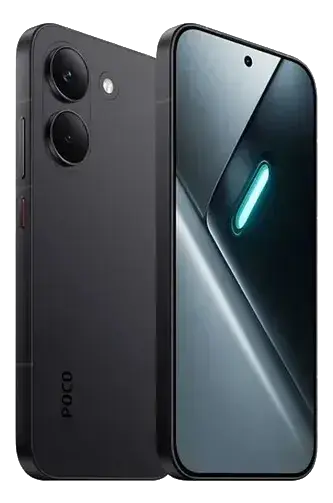
Here is the part nobody says out loud: you usually do not need a R$ 7,000 flagship to fix any of it. The Xiaomi POCO X8 Pro, currently listed at R$ 2.940 on Mercado Livre, was built around exactly those three complaints, a flagship-class chip, a 6500mAh battery and a cooling system big enough to hold sustained load without throttling into pain. This guide walks through the ten everyday problems it solves, the honest numbers behind each fix, and a head-to-head against the Samsung Galaxy S26 Ultra so you can see what an extra R$ 3.981 actually buys you.
The Short Answer
- The three biggest phone pains of 2026 are lag, overheating and battery anxiety, and survey after survey puts them ahead of camera quality and new features.
- The POCO X8 Pro attacks all three at the hardware level: Dimensity 8500-Ultra (AnTuTu 2,283,558) with LPDDR5X RAM and UFS 4.1 storage, a 5300mm² IceLoop cooling system, and a 6500mAh silicon-carbon battery.
- The endurance is lab-verified: 16:52h active use in GSMArena's standardized test and 19h24m of web browsing in Notebookcheck's, with 100W HyperCharge refilling it in about 48 minutes.
- The screen kills the "cheap phone" feeling: 6.59-inch 1.5K AMOLED, 120Hz, 3500-nit peak, Dolby Vision and Gorilla Glass 7i.
- It is not a flagship in disguise, and we say where: no telephoto lens, no wireless charging, no eSIM, USB 2.0, and the 100W charger is not guaranteed in every region's box.
- Versus the Samsung Galaxy S26 Ultra (R$ 6.921), the POCO wins on battery capacity, charging speed, display sharpness-per-realistic-price and years of updates-per-real, and loses on zoom, privacy display, wireless charging and ecosystem.
- Verdict: if your phone lags, runs hot or dies before dinner, the POCO X8 Pro solves the pain for a third of flagship money.
The 10 Everyday Problems the POCO X8 Pro Solves
Consumer research from iiMedia (2026, Chinese smartphone market), Reviews.org's Smartphone Lifespan Report and Samsung/Censuswide Europe (September 2026) converged on the same hierarchy of daily frustrations. Below is each pain, what actually causes it, and how the X8 Pro addresses it.
| # | The pain | The real cause | How the POCO X8 Pro fixes it |
|---|---|---|---|
| 1 | Battery dies before the end of the day (36% of Europeans cite frequent charging as their top frustration) | Small cells (4000–5000mAh) plus ageing chemistry | 6500mAh silicon-carbon cell, 16:52h active use in GSMArena's lab, ≥80% health retained after 1,600 cycles |
| 2 | Phone lags, stutters and freezes more every month (25.3% report system lag; 22% upgrade purely for speed) | Weak chipset, slow storage, memory that ages badly | Dimensity 8500-Ultra (4nm, up to 3.4GHz), AnTuTu 2,283,558, LPDDR5X + UFS 4.1, the storage standard flagships use |
| 3 | Phone overheats while gaming, navigating or on video calls (20.3% report it) | Heat with nowhere to go, aggressive throttling | 5300mm² IceLoop cooling keeps skin temperature up to 3°C lower under load; Notebookcheck still notes throttling in extreme sustained runs |
| 4 | "Storage full" warnings at the worst moment (25.5%, the second most cited pain) | 64/128GB configs, slow expansion, no card slot | 512GB of UFS 4.1 (roughly 478GB free out of the box) with 12GB LPDDR5X, no microSD needed in practice |
| 5 | Charging takes forever, or dies mid-morning (17.3% report slow charging) | 15–25W charging on aging cells | 100W HyperCharge: 0 to 100% in about 48 minutes, plus 27W reverse charging to top up earbuds or a friend's iPhone |
| 6 | Photos look soft, noisy or blurry at night (21.0% report poor photo quality) | Small sensors without stabilization | 50MP Sony IMX882, f/1.5, OIS, 4K 60fps video with stabilization; the 8MP ultra-wide and digital-only zoom are the honest limits |
| 7 | Screen unreadable outdoors, dim and washed out (17.2%) | Low peak brightness, cheap LCD panels | 1.5K AMOLED (2756×1268), 3500-nit peak, 2000-nit HBM, 120Hz, Dolby Vision, HDR10+, 3840Hz PWM dimming |
| 8 | Fear of rain, drops and water damage (78% of Indian users avoid using the phone in rain or heat) | No IP rating, glass that cracks on first contact | IP68 (IP69/IP69K in select markets), Gorilla Glass 7i, aluminium frame, 201g balanced body |
| 9 | Phone feels obsolete in two years, updates stop early | Short support windows on mid-rangers | Android 16 with HyperOS 3 out of the box, 4 years of OS upgrades and 6 years of security patches, support into the early 2030s |
| 10 | Paying flagship money for features you never use (price is the #1 upgrade driver, 55%) | Flagship tax on camera zoom, stylus and brand | R$ 2.940 for the hardware that fixes pains 1 to 9, with the trade-offs listed honestly below |
POCO X8 Pro: The Characteristics That Matter
Performance. The Dimensity 8500-Ultra is a TSMC 4nm all-big-core chip with one Cortex-A725 at 3.4GHz, three at 3.2GHz and four at 2.2GHz, paired with a Mali-G720 MC8 GPU. Xiaomi's own AnTuTu V11 figure is 2,283,558, roughly 70% ahead of the standard POCO X8's Snapdragon 6s Gen 4 in the same family. POCO pairs it with LPDDR5X memory and UFS 4.1 storage, plus Game Turbo with a 2560Hz instant touch sampling mode that matters in shooters.
Battery. The 6500mAh silicon-carbon cell (10% silicon content for higher density) is the largest POCO has put in an X-series phone. Independent numbers: 16:52h of active use in GSMArena's test, 19h24m of Wi-Fi browsing at 150cd/m² in Notebookcheck's. Charging is 100W wired, full in about 48 minutes, with 27W reverse wired charging. The P3 and G1 charging chips promise at least 80% capacity after 1,600 cycles, which is roughly four years of daily top-ups.
Display. 6.59 inches, 2756×1268 (1.5K, 460 PPI), 120Hz, 12-bit colour, DCI-P3, HDR10+ and Dolby Vision, with 3500-nit peak brightness and 1090 nits measured by GSMArena in auto mode. Bezels are 1.5mm on three sides, 94% screen-to-body ratio, and the panel carries TÜV Rheinland low-blue-light, flicker-free and circadian certifications alongside 3840Hz PWM dimming.
Camera. 50MP Sony IMX882 with f/1.5 aperture, 1/1.95-inch sensor, OIS and PDAF, an 8MP f/2.2 ultra-wide, and a 20MP f/2.2 selfie camera. Video goes to 4K 60fps with stabilization on the rear. There is no telephoto and no macro, zoom past 2x is digital.
Build and protection. Glass back, aluminium frame, 157.53 × 75.19 × 8.38mm, 201.47g, IP68 as standard (IP66/IP68/IP69/IP69K certified in India). In-display optical fingerprint, face unlock, NFC, IR blaster, stereo speakers, dual nano-SIM 5G, Wi-Fi 6 and Bluetooth 5.4. No microSD, no 3.5mm jack, no eSIM and no wireless charging.
Software. HyperOS 3 on Android 16, 4 years of OS upgrades and 6 years of security patches. Expect a few pre-installed apps and ads in some of Xiaomi's own apps, all disableable in settings within minutes.
POCO X8 Pro vs Samsung Galaxy S26 Ultra: What Does Extra R$ 3.981 Buy?
The Galaxy S26 Ultra is the reference Android flagship of 2026 and the honest test of the POCO's value argument: if a R$ 2.940 phone fixes lag, heat and battery anxiety, what exactly is the R$ 6.921 flagship adding? Mostly camera zoom, privacy, wireless charging and ecosystem. Here are the numbers side by side.
| Feature | POCO X8 Pro | Samsung Galaxy S26 Ultra |
|---|---|---|
| Price (Mercado Livre, October 2026) | R$ 2.940 (12GB/512GB) | R$ 6.921 (256GB) |
| Chipset | Dimensity 8500-Ultra, AnTuTu ~2.28M, 12GB LPDDR5X | Snapdragon 8 Elite Gen 5 for Galaxy, AnTuTu ~3.89M, 12GB |
| Storage | 512GB UFS 4.1 | 256GB / 512GB / 1TB |
| Display | 6.59" 1.5K AMOLED, 120Hz, 3500 nits peak | 6.9" Dynamic AMOLED 2X, QHD+, 120Hz, 2600 nits peak, Privacy Display |
| Battery / Charging | 6500mAh / 100W wired (~48 min), 27W reverse, no wireless | 5000mAh / 60W wired (~43 min), 25W wireless |
| Lab Battery Score | 16:52h active use (GSMArena) | 16:23h active use (GSMArena) |
| Rear Camera | 50MP f/1.5 OIS + 8MP ultra-wide, 4K60 | 200MP f/1.4 + 50MP 5x + 10MP 3x + 50MP ultra-wide, 8K30, 4K120 |
| Build / Protection | Glass + aluminium, IP68, 201g | Armor Aluminium + Gorilla Armor 2, IP68, 214g |
| Software Support | Android 16 / HyperOS 3: 4 OS + 6 security years | Android 16 / One UI 8.5: 7 OS + security years |
| Extras | IR blaster, NFC, stereo, 100W PPS, no eSIM | S Pen, Privacy Display, DeX, wireless charging, eSIM |
Two numbers deserve a second look. First, the lab battery scores are essentially tied, 16:52h for the POCO against 16:23h for the Ultra, on a cell that is 30% larger and costs a third of the price. Second, both phones charge from empty to full in about the same time, 48 minutes against 43, because the POCO's 100W and Samsung's 60W both top out at similar real-world speeds once charging curves are applied. What the Ultra genuinely buys is the 200MP camera with real 3x and 5x optical zoom, the world's first built-in Privacy Display, 25W wireless charging, the S Pen and seven years of updates. What it does not buy is freedom from lag, heat or the 3 PM battery warning. That problem was already solved for R$ 2.940.
Full details in our Samsung Galaxy S26 Ultra review, and in the Xiaomi POCO X8 Pro review where we push the same tests further.
POCO X8 Pro: Pros and Cons
Pros
- Flagship-class speed: Dimensity 8500-Ultra, AnTuTu above 2.28 million, UFS 4.1 storage
- Endurance that ends the 3 PM ritual: 6500mAh, 16:52h lab active use, 100W in ~48 minutes
- Stays cool under pressure: 5300mm² IceLoop cooling, up to 3°C lower skin temperature
- Display that looks twice its price: 1.5K AMOLED, 120Hz, 3500 nits, Dolby Vision
- 512GB in the base configuration actually sold, 12GB LPDDR5X
- Glass-and-aluminium build with IP68 and Gorilla Glass 7i
- 6 years of security patches and 4 OS upgrades from Android 16
- Bonuses rivals drop: IR blaster, 27W reverse charging, 100W PPS support
Cons
- No telephoto lens: zoom beyond 2x is digital only
- No wireless charging and no eSIM
- USB 2.0 port, no microSD and no 3.5mm jack
- 100W charger is not guaranteed in the box in every region, check the listing
- Throttles in extreme sustained loads, as Notebookcheck measured
- Some pre-installed apps and ads in Xiaomi services, disableable but present
- Ultra-wide camera is a basic 8MP unit
Samsung Galaxy S26 Ultra: Pros and Cons
Pros
- Best camera versatility anywhere: 200MP f/1.4 main plus true 3x and 5x optical zoom
- Privacy Display, a feature no other phone offers, per-app or always on
- Snapdragon 8 Elite Gen 5 with class-leading on-device AI performance
- 60W charging: 51% in 15 minutes, full in 43, plus 25W wireless
- Built-in S Pen with near-zero latency
- Seven years of OS and security updates
- Excellent video toolkit: 8K30, 4K120, 10-bit HDR, Log, Horizon Lock
Cons
- R$ 6.921: 2.35 times the price of the POCO X8 Pro
- 5000mAh cell unchanged for six generations, endurance merely average
- The 10MP 3x telephoto uses a dated small sensor
- No built-in Qi2 magnets, magnetic wireless charging needs a special case
- No charger in the box
- 214g and a camera bump that rocks on flat tables
When the Galaxy S26 Ultra Is Still the Right Buy
Honesty matters more than a sale. If you zoom at concerts, shoot video professionally, need on-screen privacy on public transport, take handwritten notes, or live inside the Samsung-DeX-and-wearables ecosystem, the Ultra earns its price and the POCO will frustrate you at the camera. Everyone else, the people whose real complaint is that the phone lags, gets hot and dies before dinner, is better served by the X8 Pro, then pocketing the R$ 3.981 difference for earbuds, a smartwatch and a charger they will actually use.
Frequently Asked Questions
Will the POCO X8 Pro still lag after a year?
Lag on modern phones comes from three places: a weak chipset, slow storage and memory that degrades. The X8 Pro removes two of them with a Dimensity 8500-Ultra and UFS 4.1 storage, plus 12GB of LPDDR5X RAM that keeps apps alive in the background. HyperOS 3 on Android 16 also ships with four promised OS upgrades, so the software will not be the bottleneck either. The honest limit is storage: 512GB with no microSD, so if you shoot endless 4K video, plan your cloud backup.
Does it overheat when gaming?
Less than phones in its class. The 5300mm² IceLoop cooling system holds skin temperature up to 3°C below rivals under load, and POCO's Game Turbo adds a 2560Hz instant touch sampling mode. Notebookcheck still measured throttling during extreme sustained stress runs, which is physics, not a defect: any phone under continuous maximal load will pull back. For realistic 30 to 60 minute gaming sessions it stays comfortable.
How long does the battery last in real use?
GSMArena's standardized test returned 16 hours 52 minutes of active use, and Notebookcheck measured 19 hours 24 minutes of web browsing at 150cd/m². Verified buyers on Mercado Livre consistently describe the endurance as excellent. For most people that is a day and a half to two days per charge; for heavy gamers, a full day with charge to spare.
Is the 100W charger included in the box?
It depends on the region, Xiaomi states adapter availability varies by market, so read the listing before assuming a brick is included. The phone also supports the universal 100W PPS standard, so any quality PPS charger refills it nearly as fast. Reverse wired charging at 27W turns the phone into a power bank for earbuds, watches and even a friend's iPhone.
POCO X8 Pro or Galaxy S26 Ultra for everyday use?
For lag, heat, battery and screen quality, the POCO X8 Pro at R$ 2.940 matches or beats a flagship that costs R$ 6.921. The Galaxy answers with real optical zoom, the Privacy Display, wireless charging, the S Pen and seven years of updates. Buy the POCO to solve the daily pains and keep almost R$ 4.000 in your pocket; buy the Ultra if photography, privacy and the stylus are the point.
Does it have NFC, 5G and a memory card slot?
Yes to NFC for contactless payments and to dual-SIM 5G across a wide band list, n1 to n78. No to the memory card: there is no microSD slot, but the 512GB of UFS 4.1 storage means few buyers will miss it. You also get an IR blaster for TVs and air conditioners, stereo speakers and an in-display fingerprint sensor.
Fix the Lag, Heat and Dead Battery Today
Live pricing from trusted sellers on Mercado Livre. Unlocked Xiaomi POCO X8 Pro 5G, 12GB RAM / 512GB, brand new, standard warranty.
As an affiliate, we may earn a commission when you buy through our links, at no extra cost to you. It never changes our opinion.